Diwali: Indian Festival of Lights
RATIONALE:
This is a joy filled learning sequence aimed at Year 1 / 2 students at a Victorian Primary School with a significant multicultural population, including Indian and Sri Lankan students.
In this unit of inquiry students will be participating in two lessons each of Visual Arts, Music and Dance. The theme for this unit of inquiry is Diwali, which is an Indian festival that is celebrated annually. Also known as the Festival of Lights, it is one of the most significant celebrations practiced by Hindus, Sikhs and Buddhists (Aljazeera.com). This year it will be celebrated on the 27th of October. Although different religions celebrate Diwali with nuanced variation, the consistent factor is that the festival celebrates ‘victory of light over darkness, knowledge over ignorance, and good over evil’ (forbes.com, 2017).
As the name suggests, illuminating lights is a significant symbol of this celebration. The learning and objects created in this inquiry will be incorporated into a performative piece to be viewed by foundation students. This performative artwork could also be viewed by the entire school cohort, staff and parents, at the next school assembly following Diwali.
The student learning gained through this inquiry is rich and broad, with plenty of space to explore their own creative trajectories, confidence and ability, as Kohl and Zabowski assert, ‘Art encourages children to think, developing skills and confidence as they go’ (2015).
The student learning gained through this inquiry is rich and broad. From Visual Art discipline, students will be manipulating materials to produce a 3D papier mache spherical art form around a balloon which will be illuminated with a flickering battery operated tea light. Students will also have an opportunity to learn about colour combinations and displaying their artwork in a performance. In Drama/Dance, students will learn about movement, choreography and performance through examining traditional and modern cultural dance from India. As Dinham offers, ‘They (the Arts) are integral to human society and archaeologists go so far as to say that our artist practices, along with rituals and new technologies, are the three key drivers in the evolution of humankind’ (BBC News, 2000) (Dinham, 2014, pg.3). Through the dance component of this inquiry, students learn about cultural rituals that are different from those they have experienced here in Australia, which supports their emerging intercultural understanding and empathy. Within the music discipline, students will be introduced to the basics of making music with percussion instruments. Students will also have the opportunity to experiment with provided materials to make an improvised drum and learn from experience about effecting the sound it makes by beating it in various ways to produce a variety of sounds. The students will also learn about collaboration through composing music together and about expressing ideas through composing and performing music, effecting their belief and trust in their own ability, a helpful skill for their future. In support of this idea, Grainger and Barnes reminds us that creativity ‘develops the kind of skills young people will need in a rapidly changing and uncertain world and it can improve their self-esteem, motivation and achievement.” (Grainger and Barnes, 2006, Pg.2). The benefits of learning in the music discipline are significant. Dinham offers, ‘Making music is an integral part of being human and Gardner (1999) lists musical intelligence as one of the eight ways of knowing’ (Gardner, 1999) (Dinham, 2011, pg. 265).
The learning goals for students derived from the Victorian Curriculum (VCAA) are:
Visual arts practice
-
Experiment with different materials, techniques and processes to make artworks in a range of art forms(VCAVAV022)
Present and perform
-
Create and display artworks to express ideas to an audience (VCAVAP023)
Explore and Express
-
Use safe dance practice, fundamental locomotor and non-locomotor movements, body parts, bases and zones to explore, improvise and structure movement ideas for dance (VCADAE021)
Dance Practice
-
Use choreographic devices to select and organise movement ideas and create and practise dance sequences (VCADAD022)
Present and Perform
-
Use simple technical and expressive skills when presenting dance that communicates ideas about themselves and their world to an audience(VCADAP023)
Explore and Express Ideas
-
Use imagination and experimentation to explore musical ideas using voice, movement, instruments and body percussion (VCAMUE021)
Music Practice
-
Sing and play instruments to improvise, compose and practice a repertoire of chants, songs and rhymes, including those used by cultural groups in the local community(VCAMUM022)
Present and Perform
-
Rehearse and perform songs and instrumental music they have learnt and composed to communicate ideas to an audience (VCAMUP023)
Beside the VCAA standards met by this unit of inquiry, the theme of Diwali and teaching strategies used facilitated learning in all four Capabilities. Intercultural capacity is addressed through the exploration of an aspect of Indian culture. Students have an opportunity to practice empathy and personal and social capacity through tasks where collaboration, compromise and consideration of needs of all fellow learners is required. Critical and creative thinking is exercised through examining and designing components of music and dance and performance to compose an integrated performative artwork.
Lastly, rich learning about the Indian culture will be laced through the entire learning experience, increasing their intercultural understanding and acceptance of others, and is a good mindset to establish while young, for their present and future lives.
LEARNING SEQUENCE
The learning sequence would begin with the entire year 1 / 2 cohort coming together, seated on the floor in preparation for a storybook to be read to them.
To acknowledge the students that celebrate Diwali, the group would be addressed with: ‘Good morning Year 1 and 2’s. Who knows what Diwali is?! Okay boys and girls, if you’d like to know what celeb rating Diwali is like in a family, you might like to ask someone with a raised hand’.
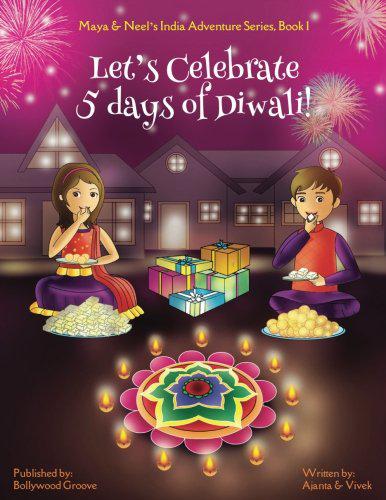
Immediately following this, the storybook Let’s celebrate 5 days of Diwali! (by Ajanta Chakraborty and Vivek Kumar) would be read to the students to contextualise the theme.
After the story, a succinct explanation of the art, dance and music lessons format and planned performance would be explained and students would be taken to their first lesson in either art, dance or music.
Follow these links to discover what students will learn:
© Copyright Ingrid Schmidt